
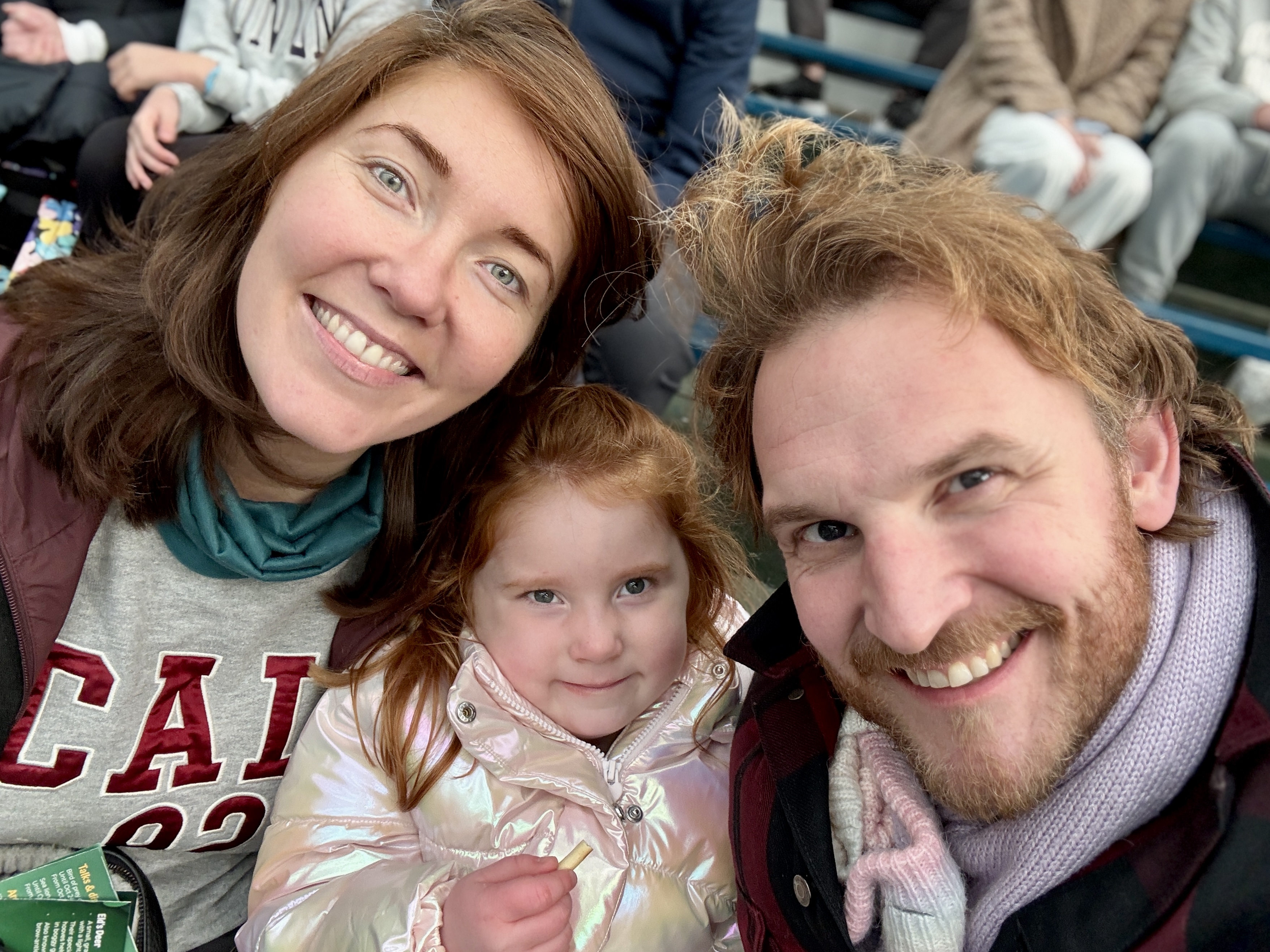
I run more than one business. I'm a dad, a partner and a dog dad. Like a lot of people, I spend a fair bit of my life trying to keep several plates spinning at once.
Some days that means meetings, decisions, finances, emails and problems that arrive without warning. Other days I'm travelling, performing, fixing something that's broken or trying to move a business forward. Then there's family life: the school run, dinner, bedtime, walking the pup and all the usual things that come with a home and a young family.
I wouldn't change that for the world.
But there's something I've become more aware of as I've got older. I'm quite good at looking after everyone and everything around me. I'm not always particularly good at looking after myself.
This is not a guide to becoming a different person. It's not about getting up at five, meditating for an hour or pretending that a busy life can be tidied away with the right routine.
It's about that little bit in between.
The moment when work is finished, but you've not really arrived home yet.
I call that bit the landing.
1. When does the working day actually end?
For people who work set hours, there's often a fairly obvious end to the day. You clock off. You leave. You go home.
That doesn't mean you stop thinking about work, of course. But there's at least a physical separation.
When you run a business, work can be much less tidy than that. Your phone doesn't stop receiving messages because it's five o'clock. Problems don't resolve themselves because it's time for dinner. And there's almost always another job that could be finished.
Another email. Another idea. Another thing that needs dealt with tomorrow.
You can be sitting on the couch with the people you love, physically there, while your head is still working through something that happened six hours ago.
I don't think that's only a self-employed problem. A lot of people will recognise it.
Just because you've stopped working doesn't necessarily mean you've switched off.
That's the distinction I've started paying more attention to.
A small question
Think about an ordinary day, not an ideal one.
What usually tells me work is finished?
________________________________________
What usually happens in the ten minutes after that?
________________________________________
There's no right answer. Just notice whether there's a gap at all.
2. Finishing work is not the same as arriving home
There's a difference between finishing work and actually arriving home.
Not arriving at the front door.
Arriving mentally.
Being present enough to hear what someone has said to you. Being able to play with your child without half-reading an email in your head. Taking the dog out without spending the whole walk looking at your phone. Sitting down for dinner and not feeling as though you ought to be somewhere else.
I don't always get this right. Nobody does.
There are times when I'm tired, distracted or thinking about too much. There are undoubtedly times when my partner would quite reasonably say that I'm not listening properly because I'm still trying to solve something from work.
That's life. But noticing it matters.
There's a big difference between spending time with the people around you and giving them your attention.
The aim isn't to be present every second. It's just to give yourself a better chance of arriving.
What tends to follow you home?
Tick any that feel familiar, or add your own.
A task I did not finish
A message I feel I should answer
A decision I'm still turning over
The pace of the day
The feeling that I need to stay available
A laptop, bag or phone still in sight
Something else: __________________________________________
One useful distinction
Stopping work is practical. It might mean finishing a call, shutting the laptop, getting off the train or locking a door.
Landing is the handover that follows. It might mean writing down tomorrow's next step, putting a bag away, getting changed, walking the dog, making a cup of tea or standing quietly for a minute before the next part of the day begins.
It doesn't need to be impressive. It just needs to be possible.
3. The five-minute landing
One thing I'm trying to move away from is the idea that looking after yourself has to involve a grand lifestyle overhaul.
That's where a lot of us fall down. We decide we're going to get fitter, eat better, sleep more, spend less time on our phones and somehow become entirely different people by next Monday.
Then life happens.
Someone needs something. A problem comes up. The day runs away with us. And the whole plan disappears because it was never going to fit the day we actually had.
So start smaller.
What can you realistically do with five minutes?
Not five perfect minutes. Five ordinary ones.
Your five-minute version
1. Leave yourself one next step. If something is unfinished, write down the first practical thing you will do tomorrow. Not the whole list. Just the next thing.
2. Put one work thing away. Close the laptop. Put the bag by the door. Move the charger. Clear one part of the kitchen table. Give work a place that's not everywhere.
3. Change something physical. Step outside. Change your clothes. Wash your hands. Make a drink. Move from one chair to another. The change can be tiny.
4. Don't add more input. Put the phone down for a few minutes if you can. You don't need another podcast, another message or another thing to react to straight away.
5. Begin one ordinary evening thing. Start dinner. Walk the dog. Sit with your child. Speak to your partner. Look out of the window. The ordinary thing is enough.
You don't have to earn that five minutes by finishing everything first.
Write your own version
The work thing I can put away is:
________________________________________
The smallest change of scene I can make is:
________________________________________
The ordinary evening thing I want to arrive for is:
________________________________________
4. When five minutes is not enough
Sometimes a few quiet minutes are not going to cut it.
Sometimes you've had a difficult week. Sometimes you're mentally exhausted. Sometimes life has just been relentless.
That's when a little more deliberate time can help. Not because you've failed at the five-minute version, but because the week has asked more of you.
For one person that might be the gym. For someone else it might be a long walk, swimming, reading, music, cooking, being outside or sitting somewhere with nothing demanding their attention.
Through FLOAT ONE, I've seen how much it can matter to people to have a place where they can genuinely disconnect from the outside world. I've also seen the irony of running a wellbeing business and being as guilty as anyone of not giving myself that time.
It's easy to understand why people struggle with it. When you're responsible for work, money, customers, staff, a family or other people who rely on you, taking an hour for yourself can feel like an indulgence.
But is it?
If that hour leaves you a little more settled, rested or able to deal with the things waiting for you, perhaps it's not an indulgence at all.
The activity matters less than giving yourself permission to do it.
And not feeling the need to justify it.
A longer landing
If you've twenty minutes, try this:
1. Write down the next step for one unresolved work thing.
2. Put the visible work materials away, or make them less visible.
3. Go for a short walk, sit somewhere different, or do something that doesn't require another decision.
4. Before you return, choose one thing you're not going to solve tonight.
The thing I can leave until tomorrow is:
________________________________________
5. A few ways to make a transition
There's no perfectly structured evening routine in this guide, because life doesn't work like that.
Some days you're home in the middle of the afternoon. Some days you're out until late. Sometimes work and family life overlap from morning to evening. Sometimes the kitchen table is also your desk. Sometimes you've a school run, a dog that needs walked, dinner to make and someone telling you about their day before you've had a chance to take your coat off.
Pick the version that works with your life, rather than the one that sounds most impressive.
The practical close
Useful if work is still sitting in front of you.
Write tomorrow's first step on paper.
Close the tabs you're finished with.
Put a notebook, uniform, bag or charger in one place.
Clear one small part of the surface you're working on.
Say to yourself: “This can wait until I come back to it.”
You're not trying to organise your entire life. You're just trying not to carry the whole list into the evening.
The dog-walk version
Useful if you need a bit of movement, and perhaps a reason not to look at your phone.
Go out for five or ten minutes without making it another errand if you can. Notice the first corner, a change in the light, a house you've walked past a hundred times, or something that's not asking anything of you.
There's no route to optimise. It's just a short bit of travel between one part of the day and the next.
The change-of-room version
Useful when work happens at home and you've no commute to separate it.
Move somewhere else, even if it's only to another chair, the hallway, the doorstep, the kitchen sink or the end of the garden. Once you're there, notice three ordinary things: something you can see, something you can hear and something you can feel.
This isn't a test. It's just a reminder that you're somewhere else now.
The quiet-gap version
Useful when there's almost no time.
Make a drink. Wash your hands. Stand at a window. Sit on the edge of the bed. Put the phone face down and give yourself five minutes with no extra input.
You don't need to solve the thought that comes up. You only need to avoid immediately turning it into another task.
6. When the plan goes out the window
Some days don't have a clean ending. A call runs late. A child needs you. A journey takes longer than expected. Someone is unwell. You're tired before the day is even over. The phone goes again. Life gets in the way of the plan.
This guide isn't asking you to find time you don't have.
On those days, the smallest version still counts:
Put one work object out of sight.
Write one unfinished item down rather than carrying it in your head.
Change where you're sitting.
Wash your hands before the next job.
Stand at the window for a minute.
Take one slow breath before opening the next message.
If none of that's possible, let the landing be one sentence:
Work is still with me today. I don't have to solve it all before the evening can begin.
There's no need to catch up tomorrow. One difficult day doesn't undo anything.
If work arrives again after you've made the transition, notice it, decide whether it really needs action now, and if it can wait, leave yourself one clear next step. Then go back to what you were doing.
Make the tea. Finish the walk. Continue the conversation. Sit down again.
7. A week of noticing
This isn't a scorecard. You're not measuring whether you've been good at resting.
Use it for a week, or for seven workdays that make sense for you. The idea is just to notice what made a little room, and what was too much to expect from the day.
| Day | How work ended | What I did next | One thing that helped | One thing I can leave unfinished |
|---|---|---|---|---|
| 1 | ||||
| 2 | ||||
| 3 | ||||
| 4 | ||||
| 5 | ||||
| 6 | ||||
| 7 |
At the end of the week, ask yourself:
What made it easier to arrive?
________________________________________
What was too much to ask of an ordinary day?
________________________________________
What is one small thing I'd keep?
________________________________________
Not perfectly. Just better.
8. A card for the days you need it
The Landing
1. Close one loose end
Write tomorrow's next practical step. Leave the rest for another time.
2. Change something physical
Close the laptop. Put away the bag. Change rooms. Step outside. Change your clothes. Clear one small surface.
3. Make a little room
Five quiet minutes is enough. You don't need to add more input.
4. Arrive for one ordinary thing
Make dinner. Walk the dog. Sit down. Speak to someone. Play. Look out of the window.
5. Let the day be incomplete
There will always be another task, another responsibility and another problem to solve. You don't need to finish everything before the evening can begin.
A final word
I don't think the answer to a busy life is pretending that it's not busy.
I enjoy the variety of my work. I enjoy the creativity, challenges and opportunities that come with it. I also love my family life, even when it's chaotic.
The problem isn't that there's a lot going on. It's when you never give yourself permission to put it down, even temporarily.
If your family is a priority, looking after yourself has to be part of looking after them.
That doesn't mean becoming a picture of perfect health. It means making a little room, when you can, to be more rested, more patient and more present for the life you've worked hard to build.